Why Item 8.4 Should Not Be on the Consent Agenda
I’ve avoided weighing in on this, but Agenda Item 8.4 leaves no room for silence. It is time to talk about Flock Safety, ForceMetrics, and the continued expansion of artificial intelligence in policing in Ward 2, Sparks, and beyond.
Agenda Item 8.4 appears on the consent agenda for the January 12th, 2026 Sparks City Council meeting - and that matters. Consent agenda items - 8.1, 8.2, 8.3, and 8.4 - are not discussed individually. They are bundled together and approved in a single vote. Unless a councilmember pulls an item for separate consideration, all of them pass without debate.
Routine, administrative matters: that’s the role the consent agenda plays in parliamentary procedure.
Item 8.4 is not that.
On its face, Item 8.4 appears to be a procedural vote to accept a $66,360.00 grant for police technology - and in a narrow sense, it is. But it is the specific technology that would be deployed in Sparks as a result of that vote where I take issue - ForceMetrics.
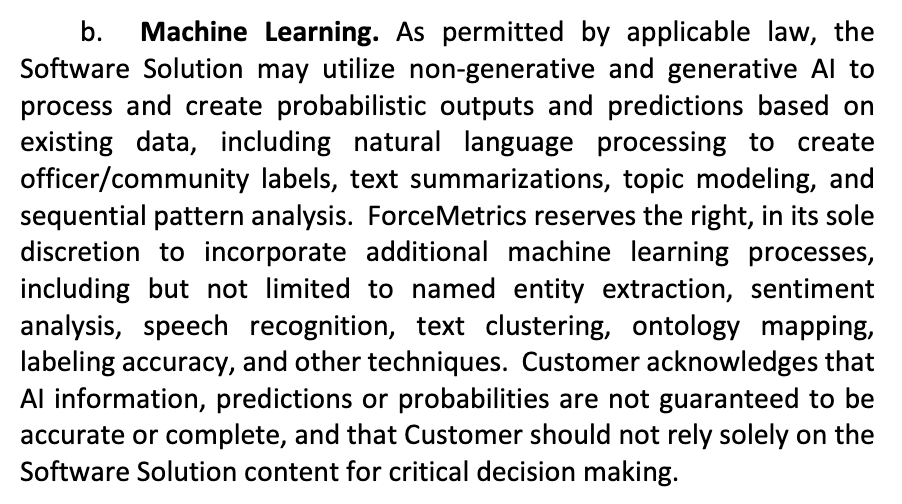
A screenshot of ForceMetrics' Machine Learning clause in its proposed contract with the City of Sparks.
ForceMetrics is a platform that uses both non-generative and generative AI to aggregate data from multiple sources and present it to first responders. On the surface, that sounds like a good thing. It links systems such as the Real Time Information Center (RTIC), Flock Safety cameras - I will come back to Flock - and other databases. Read at a glance, it all sounds peachy.

A screenshot of ForceMetrics homepage, captured January 8th, 2025.
The City of Reno and the Reno Police Department already uses this product.
That fact helps bring context to what happened in September of 2023, when a Reno Police officer placed significant confidence in AI-driven facial recognition software at a local casino and disregarded a trucker’s Nevada-issued Real ID, credit cards, pay stubs, and other documentation - wrongfully arresting and detaining him for more than 11 hours.
The man who was wrongfully arrested has since reached a settlement with the casino and is now suing the City of Reno, the Reno Police Department, and the arresting officer for violating his 4th Amendment constitutional rights. Even if the City ultimately prevails, defending that lawsuit will cost Reno a substantial amount of public money.
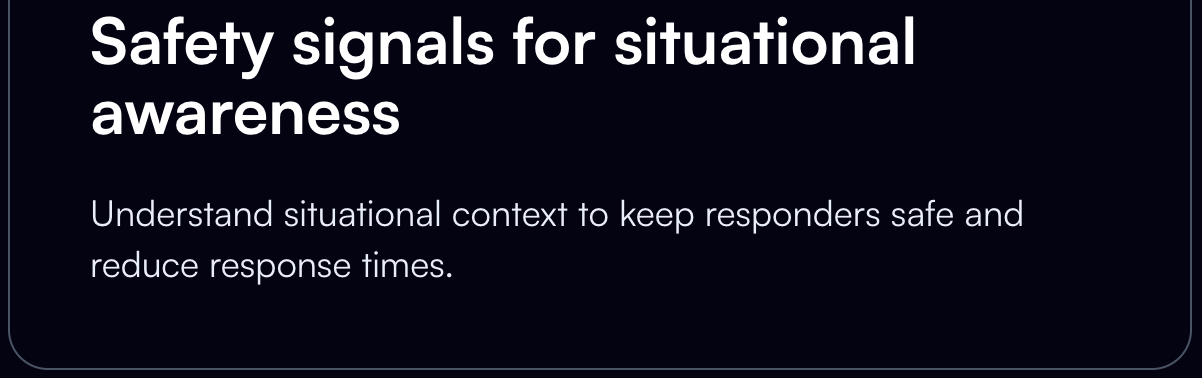
A screenshot of a section of ForceMetrics website, captured January 7th, 2025.
This highlights one of the biggest selling points of these AI systems - and of ForceMetrics specifically - increased situational awareness. But what happens when the system gets it wrong? What happens when officers place too much faith in what the system tells them?
An innocent person can be treated like a violent felon, and even a Nevada Real ID may not be enough to settle the matter because, “the AI said so.” On the other side of that same coin, what if the system misses something and falsely puts an officer at ease when greater caution is warranted?
That is the risk with these systems. When treated as advisory tools, they can make jobs easier and safer. When treated as authoritative, they can amplify human error. We have already seen this pattern across industries - most visibly with self-driving car failures or even the 737 Max crashes in 2018 and 2019 - and policing is not an area where we can afford that kind of mistake.

A screenshot of a section of ForceMetrics website, captured January 7th, 2025.
Refocusing on Item 8.4 - accepting $66,360.00 to pay for ForceMetrics - it is important to note that this is a software subscription. What happens next year? Or the year after that? Once officers are trained on it and workflows depend on it, what happens if the grant isn’t renewed? Does this simply become another $66,360.00 annual liability the City of Sparks is expected to absorb?
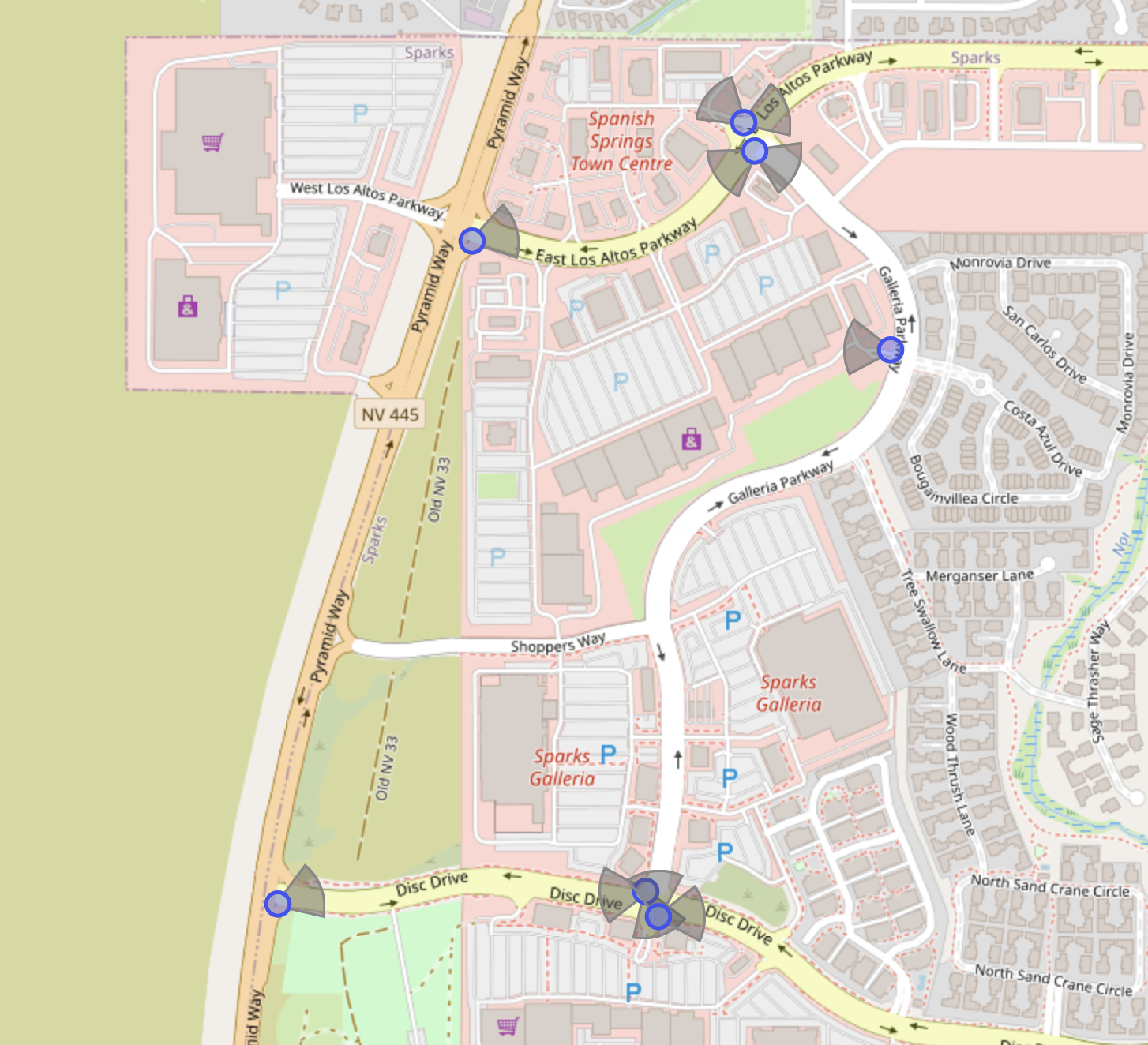
I have mentioned Flock Safety cameras earlier, and if you know me, they are one of my least favorite products - and not just because of what they do. Flock Safety cameras are automated license plate readers (ALPR) leased to cities for roughly $5,000 per year, per camera, with additional installation and maintenance fees. Sparks currently has 45 of these cameras installed, operated by Flock Safety on behalf of the Sparks Police Department.
These cameras are placed in strategic locations so the network can determine what zones or parts of the city a vehicle travels through. The stated goal is to assist in criminal investigations. For example, many cameras are located around Legends Mall - it is nearly impossible to park there without passing one. If there is a retail theft, police may have an image of the suspect from the store and then query the camera network to see what vehicles were in the area.
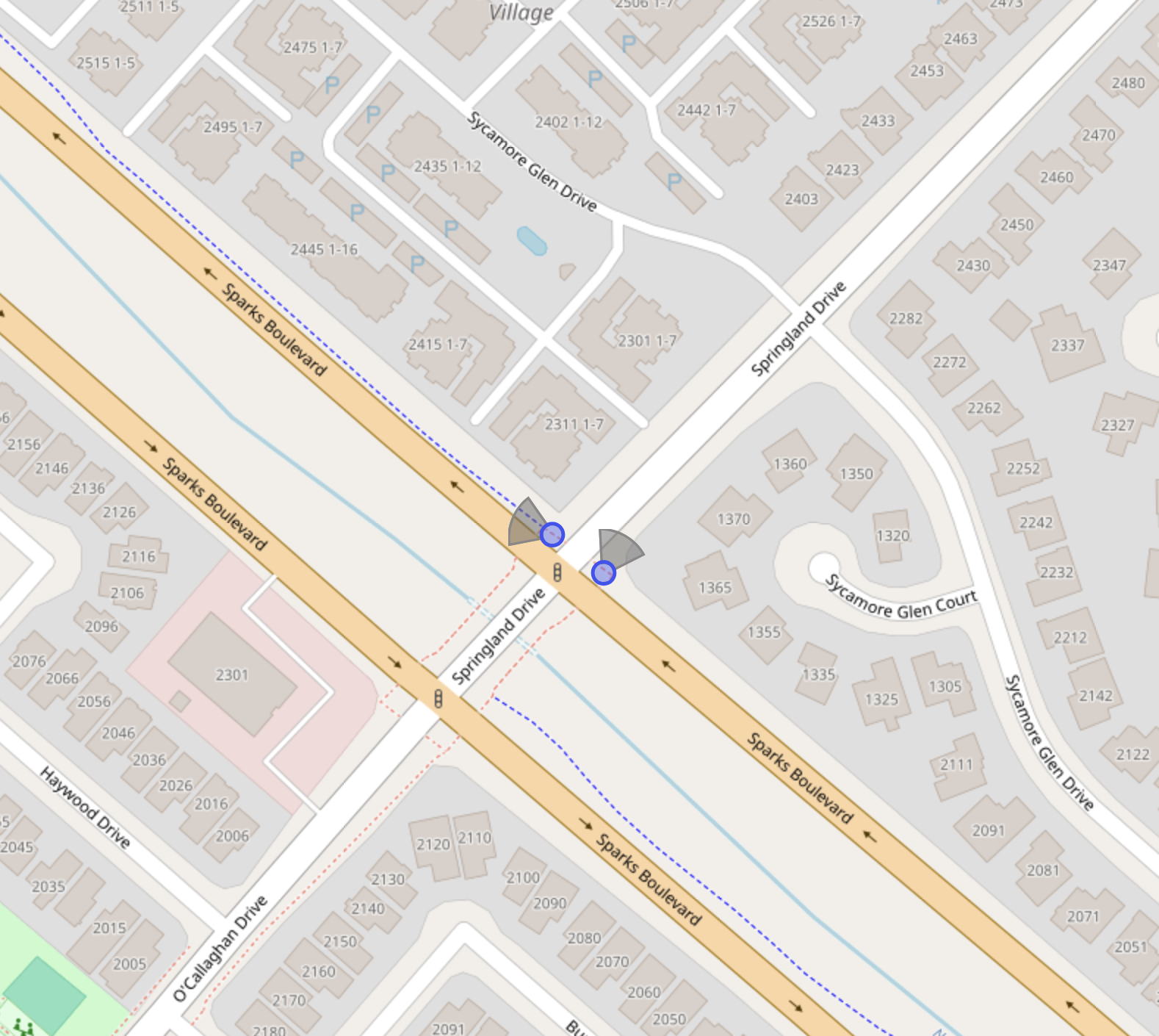
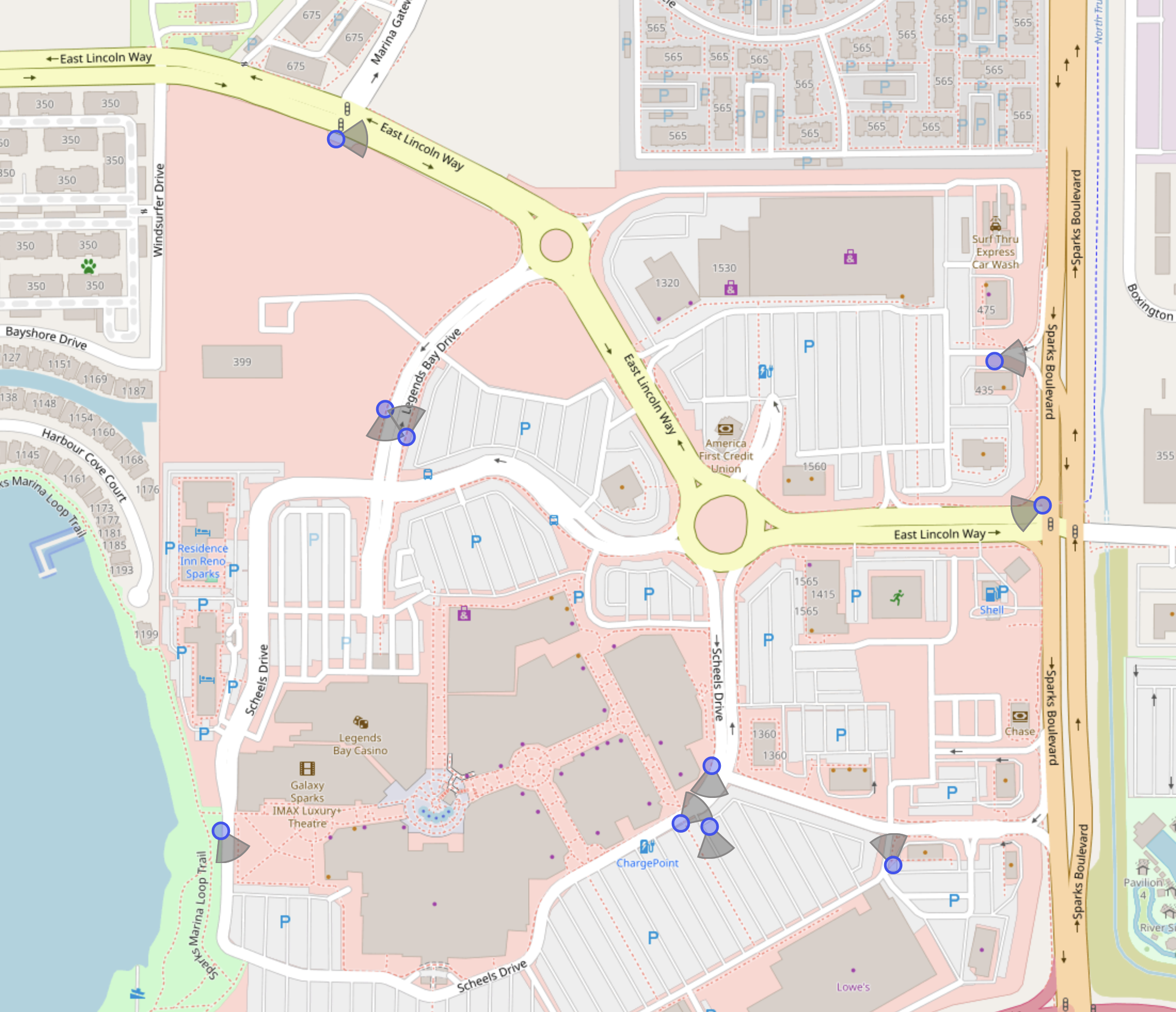
I have multiple criticisms of Flock Safety, their cameras, and how their network operates.
When enough cameras are deployed and become unavoidable, they stop being a tool for checking whether a vehicle was in a specific location. They become a system capable of building detailed travel records. This is not targeted surveillance of a specific suspect - it is mass surveillance of everyone in Sparks, 24/7, regardless of whether they are suspected of a crime. Your travel history - each time you pass one of these cameras - is stored in a searchable database.
If a vehicle does not have a license plate, Flock Safety uses AI to identify other characteristics - what the company calls a “vehicle fingerprint.” I believe this level of surveillance, at this scale, violates our 4th Amendment rights.
This is not a school or private company monitoring who enters its property. This is a municipal government and police department contracting with a private company to install cameras in unavoidable locations throughout the city. To the point that, with skilled database querying, I believe that the Sparks Police Department and the City of Sparks could identify nearly every vehicle currently within city limits - with a margin of error of 15 percent or less.
Why focus on Flock Safety? There are other ALPR manufacturers - Reno, for example, has deployed Motorola units. But Sparks uses Flock Safety cameras. Beyond my belief that this surveillance violates the 4th Amendment, I also believe Flock Safety is not a good partner and not an ethical company.
Flock Safety has a publicly documented history of poor cybersecurity practices, including incidents where sensitive API keys were exposed - allowing unauthorized people access to confidential information, including real-time locations of police officers. The liability created by collecting and storing this data is immense. And for what benefit?

A Flock Safety camera at Legends in Sparks photographed in 2025.
When journalists, whistleblowers, and critics have raised concerns, Flock Safety has too often responded not with transparency or remediation, but with hostility - including their CEO referring to deflock as a “terroristic organization.” That response alone should concern any city trusting this company with sensitive resident and law enforcement data.
This is not a company the City of Sparks or the Sparks Police Department should be doing business with.
Flock Safety has also made sweeping claims about effectiveness. At one point, the company claimed its cameras helped solve 10 percent of all crime in the United States - a claim that was later debunked and quietly removed from the homepage of its website. In other cases, Flock has claimed crime reductions in specific communities where data shows crime was already trending downward before the cameras were deployed.
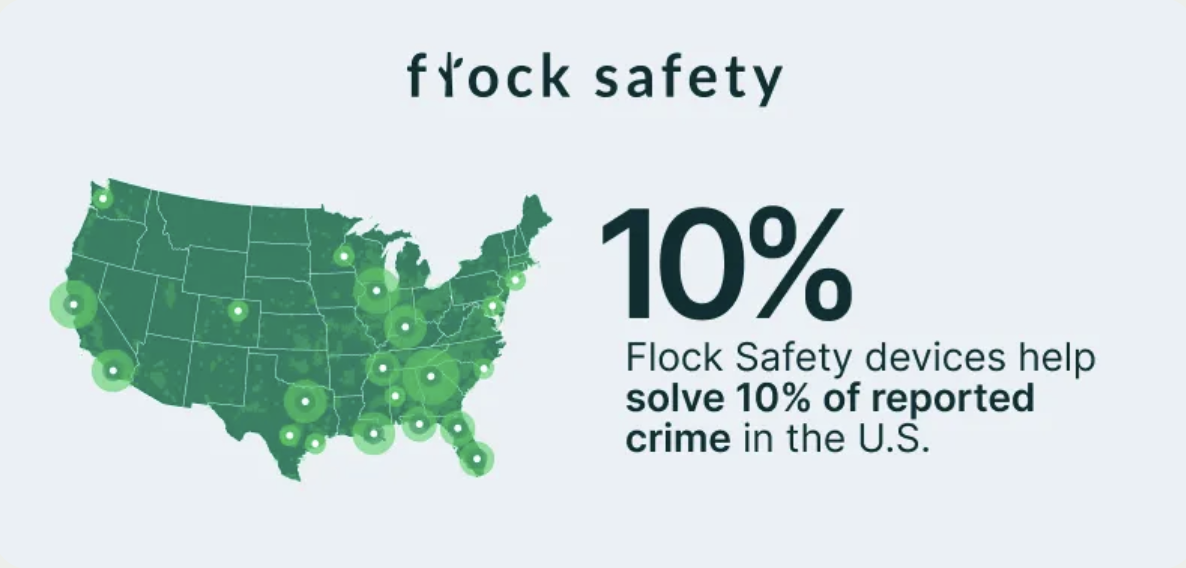
A screenshot from Flock Safety’s website.
These cameras have even been cited as potential solutions to specific crimes. At a meeting where I was invited to speak, a current Councilmember suggested that Flock cameras could have helped solve the Anna Scott murder. Maybe they would have. Maybe they would not have. But according to publicly available deployment maps, there are still no ALPRs deployed on I-580 near the crime scene all these years later. And even if there had been - what if a stolen vehicle was used? What if it had no license plate, no bumper stickers, and no distinguishing features for Flock’s AI to “fingerprint”?
At that point, what are we really buying? In my opinion, roughly $300,000 per year in snake oil.
So how does this tie back to Agenda Item 8.4?
ForceMetrics is designed to aggregate data into a single interface. It has a partnership with Flock Safety, meaning that data would be included. ShotSpotter data, data from the Sparks Police drone deployed from City Hall, RTIC data, 911 call data, internet-sourced data, and potentially other databases that may not be publicly disclosed.
The exact scope of this integration matters - and that is precisely why this deserves public discussion.
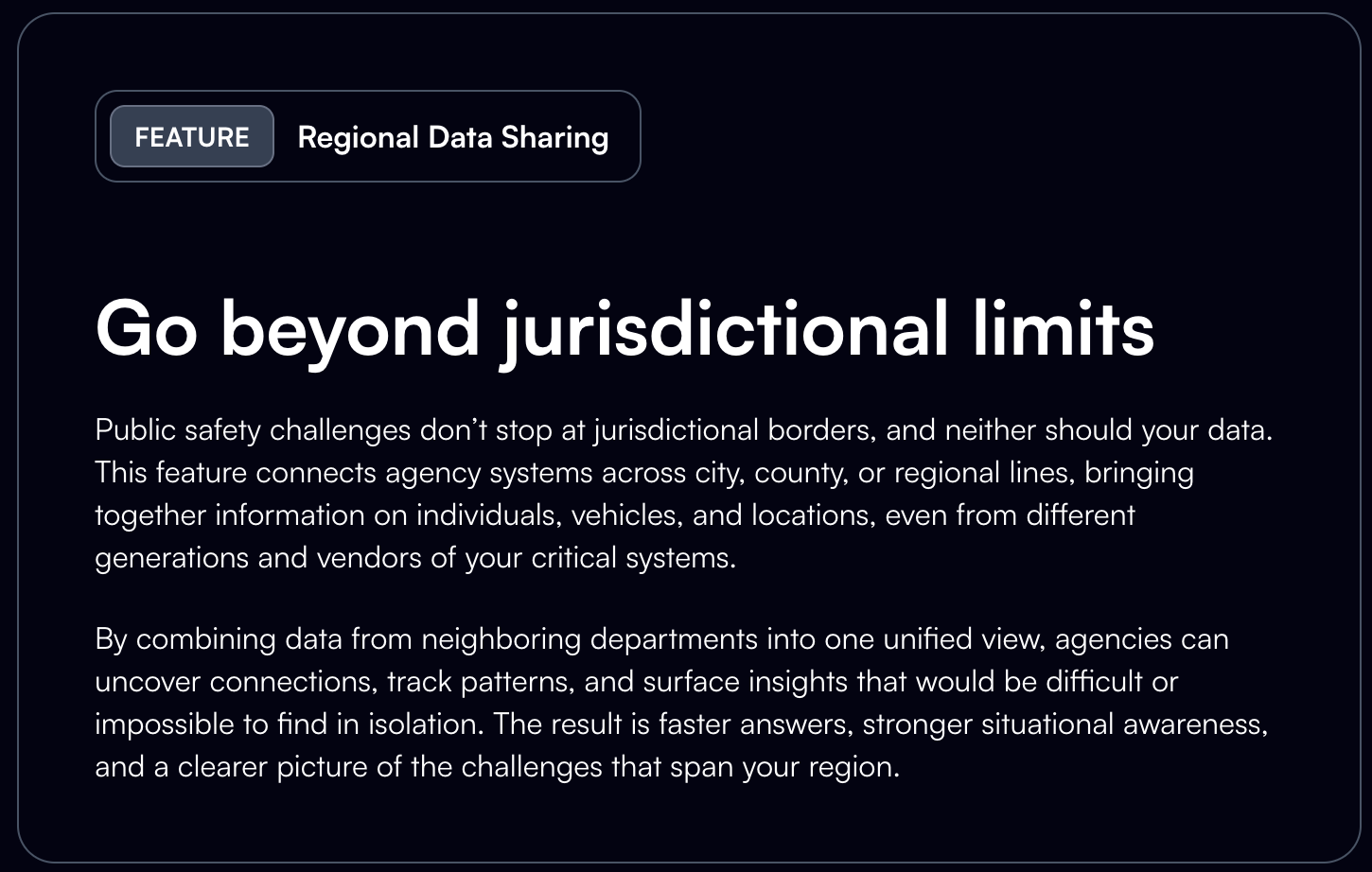
A screenshot of a section of ForceMetrics website, captured January 7th, 2025.
This technology will affect every law enforcement response - and potentially every emergency response - going forward. It affects every resident of Ward 2 and Sparks, as well as anyone who visits our city. Decisions with impacts this broad should not be approved without public debate.
This is also not the first time controversial AI technology has been implemented through the consent agenda. On September 22, 2025, the Sparks City Council voted to enter into a two-year agreement with DeskOfficer, Inc. to deploy an AI voice agent for the Sparks Police Department’s non-emergency dispatch line. That vote passed unanimously, with no discussion or debate, and with minimal public engagement.
What I am asking for is simple. Item 8.4 should be pulled from the consent agenda and tabled. The City of Sparks should hold public meetings on this technology before any vote is taken, or at a minimum, present to the City Council on the record.
Public trust in policing depends not just on outcomes, but on transparency, restraint, and accountability. Item 8.4 deserves that standard.