Who do I represent? Sparks, Ward 2.
This post isn’t actually about fire regionalization. It’s about something bigger - who I represent, and who City Hall is actually working for.
On Thursday evening, I attended the Regional Fire Study meeting at the Washoe County Complex. I was encouraged to see some elected officials show up and engage. I was equally disappointed by those who didn’t - especially those who sit on the Regional Fire Study board. I want to acknowledge Sparks’ Ward 3 Councilmember, Paul Anderson, for being there and taking the time to speak with residents and community members. That’s not an endorsement in either direction - just a recognition that showing up matters.
I’ll write more in depth about fire regionalization soon. But I’ll be honest - my perspective has changed. Here is a previous post about park and fire regionalization.
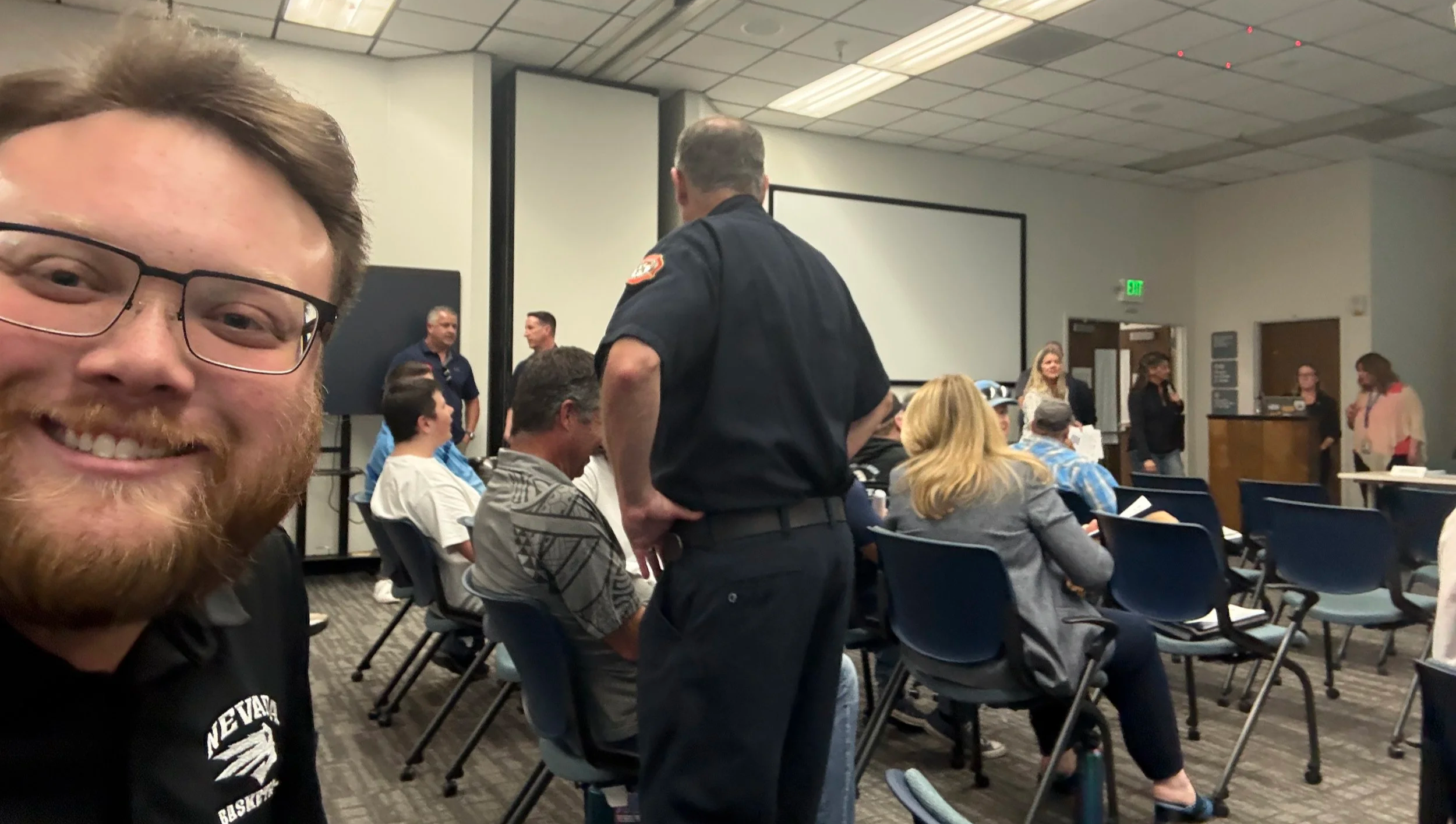
Selfie taken by Hunter Rand before the meeting at the NNPH conference room.
At first, I supported the idea because I believed it was about efficiency. That’s not what this appears to be.
What’s becoming clearer is that this seems to be about shifting fire services into a new regional agency - with a new governing body - while freeing up existing local funds for other uses. And that means new costs. Taxes, fees, assessments - one way or another. And it’s not just fire. Similar conversations are happening around parks. So the real question is simple: how much more are residents expected to pay every month?
Because even one dollar more matters.
Over the past year, the cost of living in Sparks - especially the costs you can’t avoid - has steadily increased. Sewer rates are rising. Waste Management fees have gone up. NV Energy bills are higher. Insurance costs are climbing as pressures on public safety and risk increase. Individually, none of these seem overwhelming. Together, they add up. Five dollars here. Thirty dollars there. Fifty dollars somewhere else.
For some households, that’s another $50 a month. For others, it’s over $150. And for many of our neighbors - retirees, widows, families on fixed incomes - that’s not an inconvenience. It’s the difference between stability and uncertainty.
Ward 2 is at risk of pricing out the very people who built it.
That’s why fiscal responsibility matters. This city has to become sustainable with the resources it already has, and we need to pursue solutions that reduce the burden on residents - not increase it. That means going line by line through the budget. Not looking for one massive cut, but identifying small efficiencies everywhere - one percent here, half a percent there. Done consistently, those small gains become real, meaningful savings.
Some people say that kind of savings is just a drop in the bucket. But enough drops become something powerful; with enough drops you might even have an ocean That’s how you build real change. We should be lowering costs wherever we can, not passing them along to residents who don’t have the option to shop around, because in this case shopping around means moving away.
At the same time, we continue approving growth that our infrastructure can’t handle, and no one wants to address the infrastructure beforehand - we seem to build everything we can and then try to fix the roads after everyone is already miserable. Traffic is getting worse. Development is accelerating around us. And decisions made in Spanish Springs, Storey County, and Stead don’t stay there - they impact Sparks, and they impact Ward 2. It’s all connected. And right now, we’re adding new problems before solving the ones we already have.
So when I say I want to represent the PEOPLE of Sparks and Ward 2, I mean it.
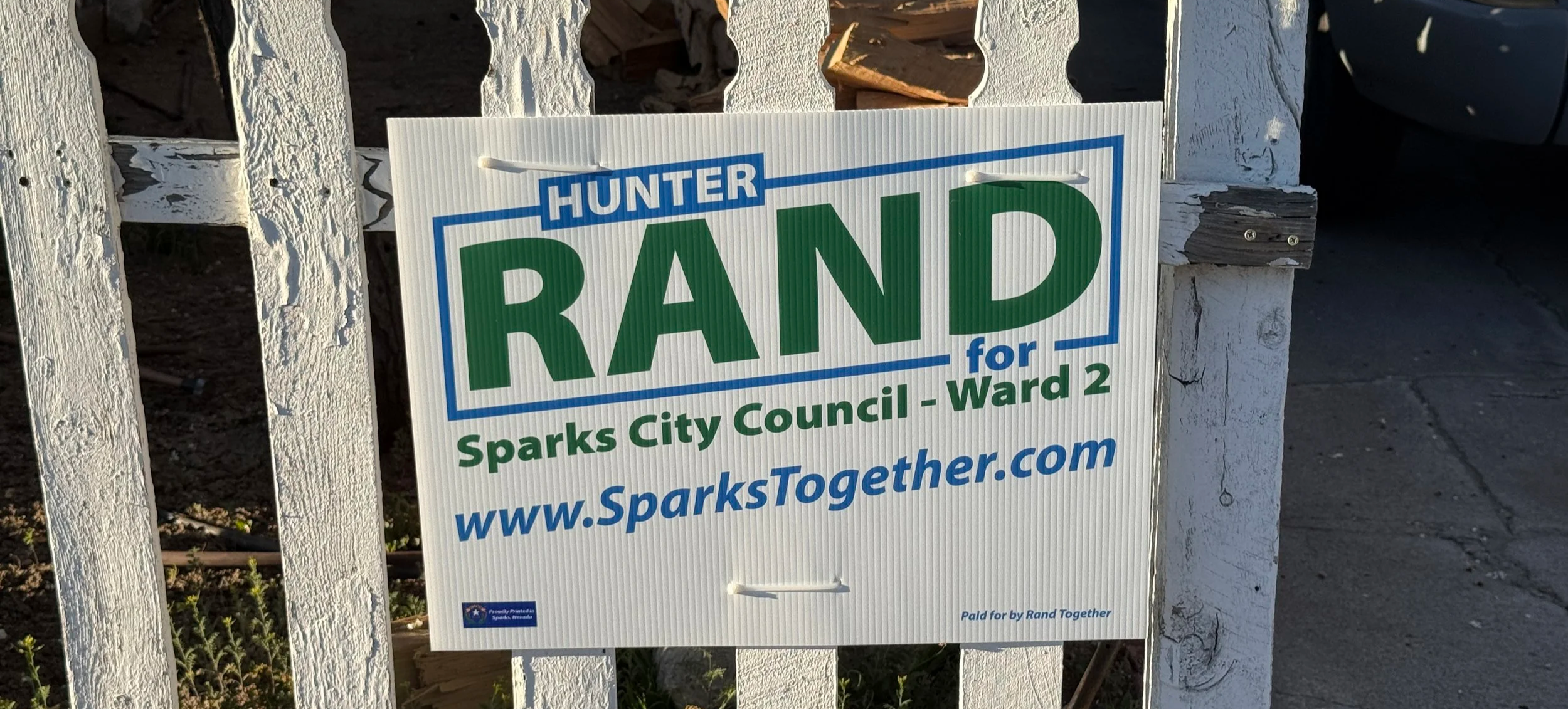
Get your Rand Together sign today! Text your name, number, and address to (775) 300-9113.
I’m talking about the people who live here - the families, the retirees, the neighbors who can’t afford another increase and don’t have the option to just, “make more money.”
This role isn’t about symbolic gestures or surface-level improvements. It’s about making decisions that protect people’s ability to stay in their homes and remain part of this community. It’s about putting people first - every time.
This election isn’t about me.
It’s about the 22,000 people who call Ward 2 home, first - and whether they have leaders who will show up, listen, and actually fight for them.
That’s what this campaign is about. This is something we don’t have. So take note, this campaign is not only a campaign for office; this campaign is my protest.
-Hunter