Fire Consolidation Makes Sense. A Regional Parks District Doesn’t.
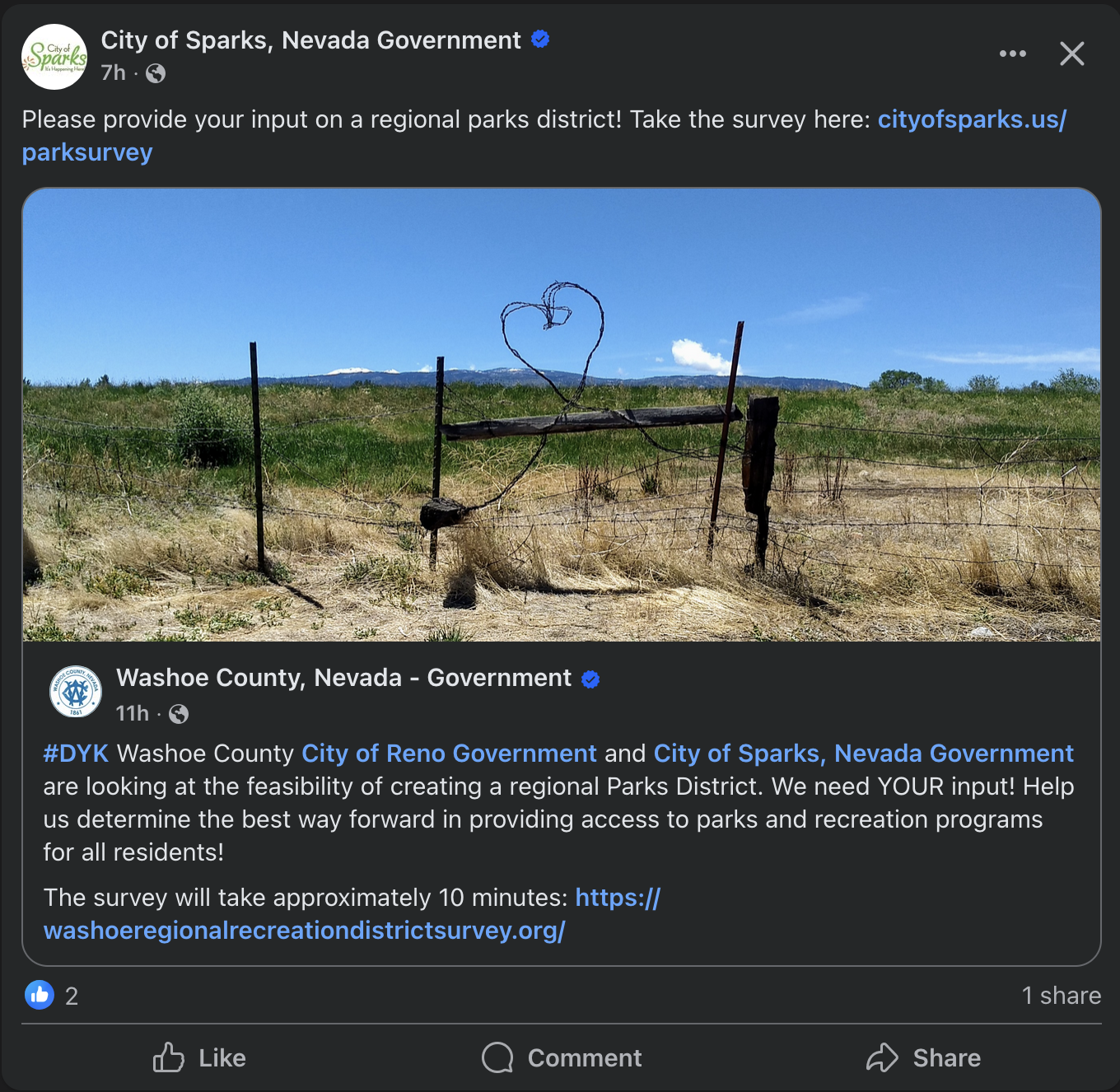
Right now, two major consolidation and regionalization efforts are moving forward in the Truckee Meadows.
The first is the consolidation of our fire services - Sparks Fire, Reno Fire, and Truckee Meadows Fire working toward a unified regional fire service. This comes after earlier consolidation steps, including the consolidation of Airport Fire and Reno Fire, and the consolidation of unions representing Airport, Reno, and Sparks firefighters.
The second is the proposal to consolidate Sparks’, Reno’s, and Washoe County’s parks systems into a regional parks district.
These proposals are often sold with the same pitch: consolidation makes services more effective and saves money.
Sometimes that’s true.
But consolidation always has a cost - and it’s not always financial.
The Hidden Cost of Regionalization: Democracy
When I talk about the “cost” of regionalization, I’m not talking about dollars. I’m talking about a participation cost - a cost to democracy.
Right now, if I want to participate in government and hold leadership accountable, I can attend a Sparks City Council meeting and address the people who have jurisdiction over most of the services that directly shape our daily lives. Parks. Fire. Police. Roads. Budgets. Development.
The Sparks City Council is accountable to Sparks residents. These are our representatives. They are elected by Sparks voters to govern Sparks.
And importantly: one meeting provides one clear public forum where residents can show up, speak, and be heard.
Regionalization changes that.
Once a service is regionalized, a basic question appears:
Who is accountable now?
In the case of fire services, oversight would likely shift to a regional fire commission - made up of elected officials from each jurisdiction, and possibly even unelected appointees. Even if those appointees are well-meaning, that structure waters down representation. Commissioners represent entire cities or counties, not our Wards and neighborhoods. And instead of one council meeting, the public now has to attend an additional meeting on another day at another time.
Public comment is not free.
When I attend Sparks City Council meetings, there is a real cost. I take unpaid time off. If residents have to attend multiple boards and commissions just to stay engaged, most people simply won’t be able to afford the time. That means fewer voices in the room, fewer residents being heard, and less accountability.
That’s the hidden cost of regionalizing government: it makes participation harder.
And here’s my controversial opinion:
When residents want to be heard, efficiency shouldn’t come at the expense of access.
That “inefficiency” is the safeguard. It’s the part of the process where any resident can show up, speak, be heard, and have their comments entered into the record. I also believe spoken public comment is taken more seriously than an email that may or may not be read.
So I don’t support regionalization automatically. It has to earn its justification.
Why Fire Consolidation Is Worth It.
In the case of regional fire services, I believe the argument is strong. The benefits outweigh the participatory cost.
In 2022, I got a call from my wife - a call I never expected to receive.
She managed a salon in Reno, and a car had driven through the front of the building. One of her employees - also her friend - was pinned against the back wall. A child was trapped underneath the vehicle. The building itself was deemed at risk of collapse because a load-bearing wall had been damaged.
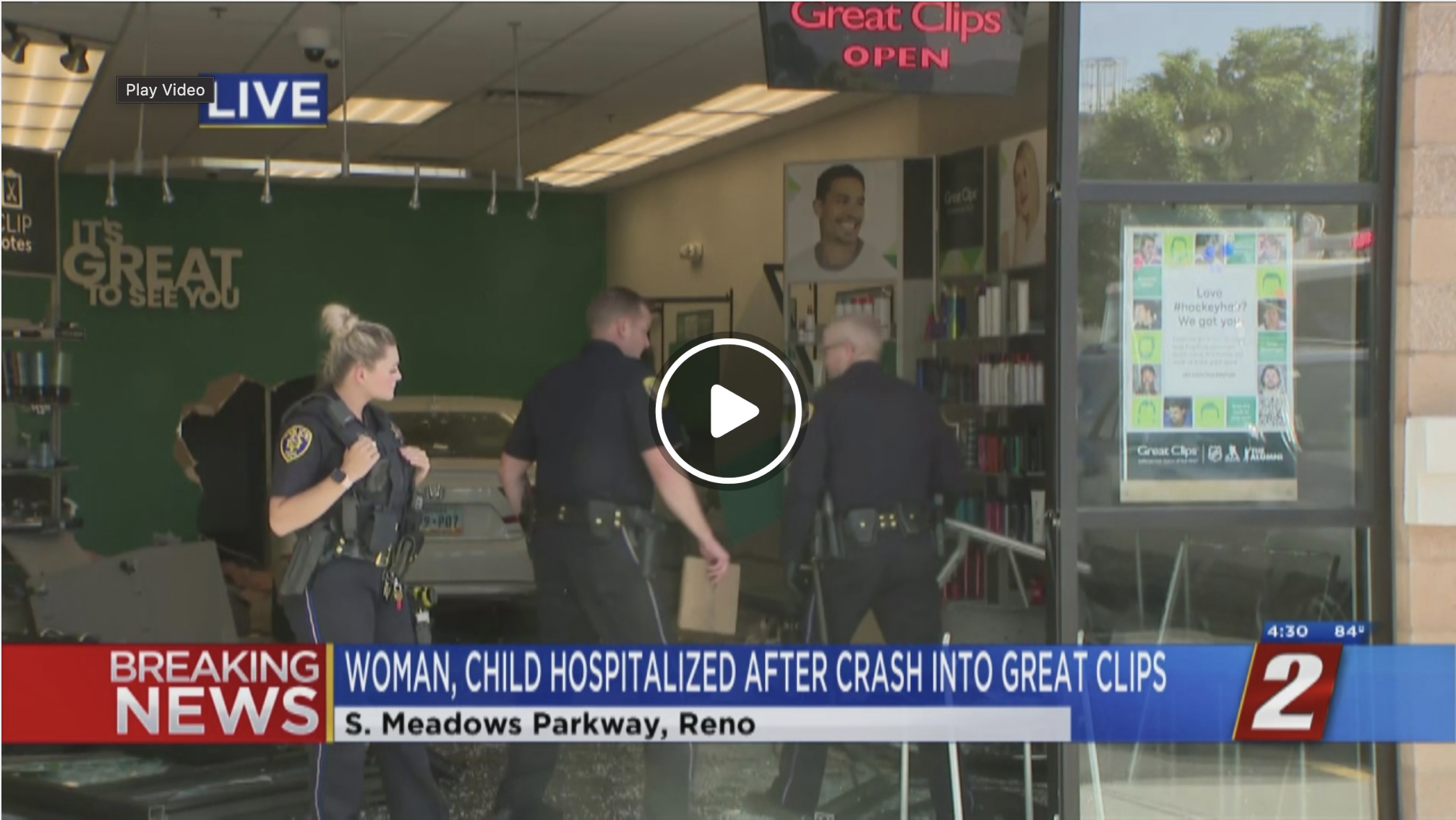
Reno Fire arrived, along with police and REMSA. I arrived about ten minutes later to support my wife, and I was horrified to realize something:
the rescue had not started.
Reno Fire needed a rescue truck - a unit with specialized equipment to lift and stabilize a vehicle and secure the structure so firefighters could safely reach the victims.
So where was the rescue truck?
Truckee Meadows Fire Station 33 had a rescue truck less than a mile away.
They never got the call.
Instead, Reno’s rescue unit was dispatched from Station 1 in downtown Reno - about fifteen minutes away.
And the worst detail?
The trapped child’s father was a Truckee Meadows firefighter. Even then, his department wasn’t dispatched.
I could go into the complexity of mutual aid systems. I could talk about budgets and redundancy in leadership. But the argument that convinced me is simpler than all of that:
A consolidated regional fire service would respond faster and more effectively because there would be no boundaries.
No delayed dispatch. No waiting on mutual aid requests. No jurisdictional lines preventing the closest unit from responding.
Just the closest unit with the right equipment, moving immediately.
I truly believe lives would be saved.
If a regional fire service had existed that day, the rescue response time could have been three-to-five minutes - not fifteen-to-twenty.
So yes, there is a cost: a regional fire commission means another board and another meeting.
But in this case, the benefits outweigh the cost. Faster response. Better emergency outcomes. Fewer preventable delays.
That’s what regionalization is supposed to do - and fire services meet that standard.
Why a Regional Parks District Doesn’t
Now let’s talk about the regional parks district proposal.
The pitch is familiar: consolidate Sparks, Reno, and Washoe County parks and staff to save money. Supporters have also floated the idea of creating a new funding mechanism that could generate revenue for parks and free up money in each jurisdiction’s budget.
But that’s really the point, isn’t it?
This isn’t like a regional fire service - where consolidation could reduce response times, improve emergency coordination, and save lives. A parks district is primarily a financial strategy. Proponents will talk about equity, regional alignment, and efficiency - but the true justification is cost.
And cost savings alone is not a strong enough reason to restructure how residents participate in government.
Because the cost of participation is real.
Right now, if I have an issue with a park in Sparks - safety, lighting, maintenance, trash, vandalism - that isn’t being addressed (use the My Sparks app) I can go to the next Sparks City Council meeting and address the council directly. And very often, the issue is addressed quickly - or, at minimum, it is formally documented in the public record.
With a regional parks district, that changes.
Instead of addressing Sparks representatives at a Sparks City Council meeting, residents would have to attend a separate regional parks commission meeting. A different day, a different time - and possibly not even held in Sparks. It might be at Reno City Hall or the Washoe County Legislative Building.
Even parking becomes a barrier.
And most importantly: representation changes.
When you address the Sparks City Council, 100% of the decision-makers are Sparks residents elected to represent Sparks. They live here. They understand the needs of Sparks neighborhoods. They are accountable to Sparks voters.
Under a regional commission, Sparks might only have one-third of the seats.
One-third Sparks.
One-third Reno.
One-third Washoe County.
That means Sparks residents are asking people from outside Sparks to govern Sparks parks.
That defeats one of the core purposes of the Sparks City Council - a body designed to represent Sparks residents and govern Sparks services. This system is not meant to be perfectly efficient. It’s meant to be representative, accountable, and accessible.
When we consolidate things simply to cut costs - because it’s the easy move - we make it harder for average residents to participate in government.
So if we want to regionalize something, we should demand a damn good reason.
Fire consolidation has that reason: better emergency response that can save lives and protect property - cost savings are just an added benefit.
A regional parks district doesn’t meet that threshold.