The Northeast Connector: Let’s Talk Traffic and Roads!
I’m in support of the Northeast Connector. I attended the meeting about the project on December 17th.
One of the biggest complaints I hear - not just from Ward 2 residents, but from people across Sparks and Spanish Springs - is traffic congestion, especially on Sparks Blvd. and Pyramid Way.
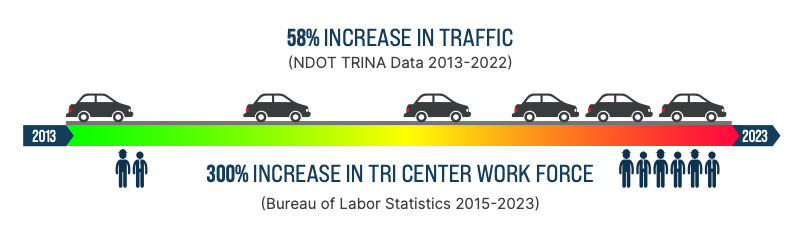
Graphic from the Northeast Connector Feasibility Study Draft Final Report. Courtesy of the RTC.
I’ve seen this firsthand. When I was teaching at Spanish Springs High School, my daily commute allowed me to see the problem in real time. In the mornings, I’d drive out toward the school and watch long lines of traffic pouring out of North Sparks. In the evenings, heading home, I’d see that same congestion flowing back toward Spanish Springs. Year after year, that traffic has crept farther up and down Pyramid Highway, roughly 2.6 miles of which runs through Ward 2.
As traffic has grown, the stretch of Pyramid Highway within Ward 2 has become one of the most dangerous roadways in Nevada - and the entire corridor from I-80 to La Posada has earned a similar reputation.
When I ask our elected representatives, “Can we do something about this?,” the answer I hear is, “It’s not in our jurisdiction.”
Technically, that’s true. Pyramid Highway is under the authority of the Regional Transportation Commission and NDOT. But the RTC is made up of elected officials from the Sparks City Council, the Reno City Council, and the Washoe County Commission. Even when a representative isn’t serving on the RTC themselves, one of their colleagues is. Advocacy is not prohibited by jurisdictional lines; it could be an email or a phone call, or a conversation - not just telling a constituent, “it’s not in my jurisdiction.”
A neighbor here in Ward 2 once joked that to fix Pyramid Way, “we just need to make it less busy.”
It was a joke - but it raises a serious question. What if we actually could make Pyramid Way less busy?
Sparks Blvd. is facing the same challenge. It’s being widened right now, but at our current rate of growth, it will be right back where it started within a few years. We could point to dozens of examples, but the most obvious today is I-80, packed with commuters heading to USA Parkway - employees at Tesla, Panasonic, Switch, and more.
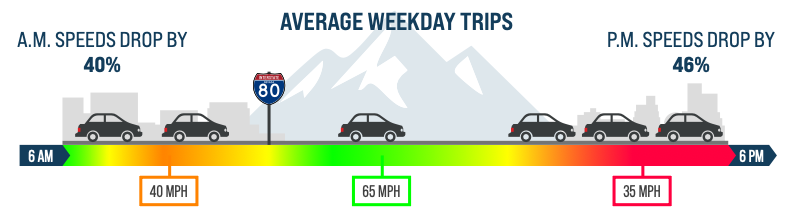
Graphic from the Northeast Connector Feasibility Study Draft Final Report. Courtesy of the RTC.
So the question becomes simple: “What if, instead of endlessly widening roads, we focused on reducing the traffic on them?”
That’s where the Northeast Connector comes in.
Imagine a direct roadway connecting the north end of Vista Blvd. straight to USA Parkway. Looking at the draft feasibility report - and being intentionally conservative with some “napkin math” - the potential impact becomes clear.
Even with planned widening, I-80 traffic will continue to grow. A direct connection from Vista Blvd. to USA Parkway could absorb an estimated 20–25% of daily trips. Out of roughly 25,000 daily trips the connector could handle, that’s about 5,000 vehicles no longer traveling on I-80.
And according to the draft report, many of those trips originate in North Sparks, Wingfield Springs, and Spanish Springs. That means those same 5,000 daily trips would also no longer be traveling south on Pyramid Way, Sparks Blvd., or Vista Blvd. before funneling onto I-80.
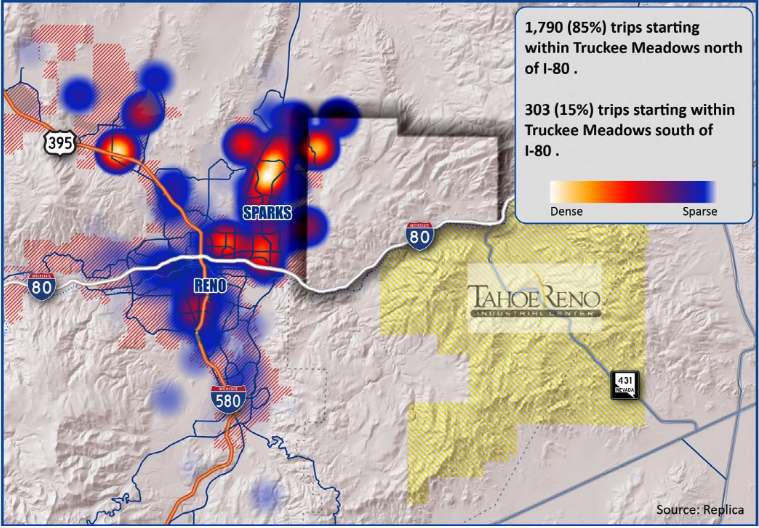
Graphic from the Northeast Connector Feasibility Study Draft Final Report. Courtesy of the RTC.
In other words, this project doesn’t just move traffic off of I-80 - it removes it from the roads where we feel it most; it removes it from the major roads in Ward 2.
The Northeast Connector is not about building another road for the sake of it. It’s about making the roads we already rely on safer, less congested, and more livable for the people who call Ward 2 - and all of Sparks - home.
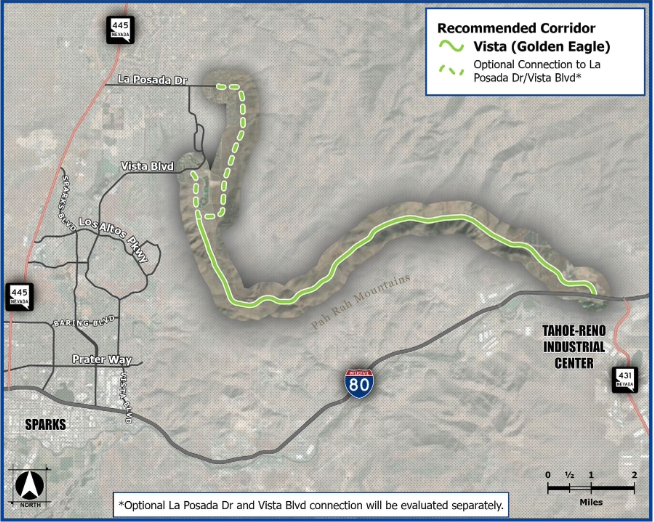
Graphic from the Northeast Connector Feasibility Study Draft Final Report. Courtesy of the RTC.